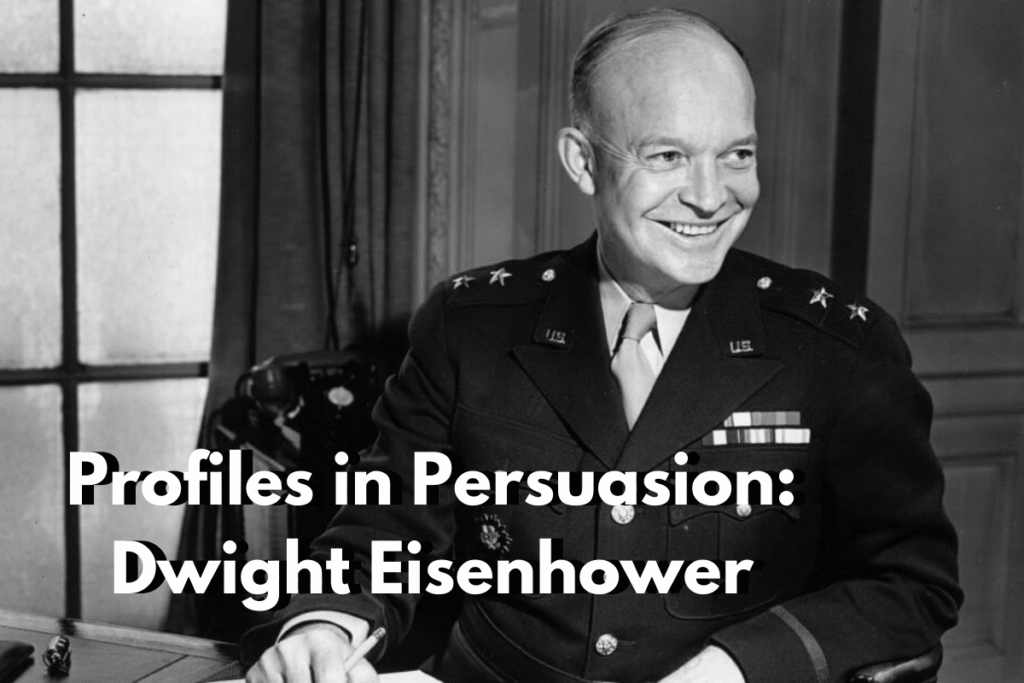
Dwight D. Eisenhower led the United States in the decade following World War II. Through his leadership, the new superpower maintained its footing on the world stage as the realignment brought about by the war shifted the balance of power away from a number of nations and into a focus on the United States and the Soviet Union.
Born into a relatively poor family in 1890, Eisenhower learned quickly the importance of leadership. His brother lost an eye in an accident. From that, young Dwight apparently saw the need for leaders to stand up and protect those weaker than themselves. That ethos led in part to his career as an esteemed general.
As nations entered the first of two world wars, Eisenhower, having graduated from West Point, was serving as a young officer. Though he wasn’t assigned overseas, he showed a particular acumen in organization and in identifying the best use of personnel. He knew how to use people in roles that would best serve themselves and those around them.
Eisenhower continued developing his abilities throughout the interwar period, but as the U.S. prepared to enter World War II he wasn’t considered a leading prospect to assume a high-level command role. But in just a handful of years, Eisenhower would lead one of the most daring operations in the history of warfare.
At the end of 1943, President Roosevelt put Eisenhower in command of the Allied forces in Europe, bestowing him with the title Supreme Allied Commander in Europe. Eisenhower oversaw the D-Day landings at Normandy and ultimately the liberation of France and victory in Europe. Beyond his prowess in the field, Eisenhower displayed leadership in another sense: From letters and documents of the time, it’s clear that he feared the blight of the Holocaust would be overlooked or discredited, so he made a point of documenting in detail the atrocities.
Eisenhower had as much leadership experience as any president since U.S. Grant, and none had more experience in such a pivotal moment in world history. In 1952, Eisenhower entered the electoral fray, opting to run for president as a Republican. Recognized as a hero, he went on to win in a landslide victory. Four years later, he again cruised to victory, in no small part due to “his sincerity, his integrity and sense of duty, his virtue as a family man, his religious devotion, and his sheer likeableness,” according to the 1960 book The American Voter.